By Zen Aura, 24 December 2025
Introduction
For much of the modern era, humanity has lived with a quiet intuition that its official history is incomplete. Not erased, not wholly fabricated, but carefully fragmented. Certain events sit at the edges of collective memory—widely known, endlessly debated, yet never fully integrated. Among them, two stand apart as bookends of a long and deliberate learning process: Roswell and Rendlesham Forest.
These were not merely anomalous sightings or curiosities of military history. Together, they reveal how humanity encountered the limits of its own readiness—and how contact itself evolved in response.
Roswell: Contact Through Rupture
The event at Roswell did not enter human history gently. It arrived through failure, rupture, and vulnerability. Something fell. Something broke. Something unfamiliar was suddenly subject to human possession. That single fact shaped everything that followed.
The immediate response was instinctive and revealing. Faced with the unknown, institutions moved to secure, isolate, and control. The event was treated as a threat to be contained rather than a relationship to be understood. This response was not malicious; it was reflexive, born of a worldview in which safety equated to dominance and understanding equated to dissection.
In the aftermath, materials were recovered that defied known categories of technology. Some behaved unlike any known metal, resisting deformation and retaining structure under extreme stress. Others appeared inert until proximity, touch, or electromagnetic presence altered their behavior. These were not simply advanced machines. They were responsive systems.
More destabilizing still were artefacts whose function had nothing to do with propulsion or energy. These components interacted with probability itself. They did not display fixed futures or predictive timelines, but shifting likelihoods—fields of possibility that changed depending on the observer. The future, it seemed, was not a destination but a landscape shaped by attention, emotion, and intention.
This discovery posed a problem far greater than the existence of non-human technology. It challenged the assumption that the future could be known, mapped, and controlled from the outside.

Attempts were made to neutralize the human variable. Automation was introduced. Emotional input was minimized. Yet the artefacts resisted passive observation. When approached with fear or strategic intent, the futures that surfaced were consistently unstable—marked by conflict, collapse, and narrowing options. When engagement was calmer and less instrumental, alternative pathways appeared, but they were subtle, decentralized, and resistant to control.
The implication was unsettling: observation itself altered outcome. Repeated focus strengthened probability. Fear amplified catastrophe. Control collapsed possibility.
What began as an effort to see ahead gradually revealed its own danger. The artefacts were not tools for dominance; they were mirrors. And what they reflected was humanity’s internal state.
Secrecy as Timing, Not Deception
Faced with this realization, secrecy took on a different function. Silence was not merely about hiding information; it was about preventing misuse. A civilization that equates power with superiority was not prepared to integrate knowledge that demanded coherence and ethical maturity as prerequisites.
Thus began a long delay—not to deny truth, but to buffer it. Instead of disclosure, there was diffusion. Fragments leaked into culture, science, and innovation without context. Technological acceleration occurred without philosophical integration. Humanity advanced rapidly, but without understanding why it was advancing so fast.
Over time, secrecy evolved into something subtler. Confusion replaced censorship. Contradictory narratives circulated freely. Truth was not suppressed; it was saturated. Ridicule, spectacle, and endless debate drained meaning from inquiry. Curiosity collapsed into fatigue.
This strategy worked—until discernment matured.
Rendlesham Forest: Contact Without Capture
Decades later, the encounter at Rendlesham Forest unfolded in deliberate contrast to Roswell. Nothing crashed. Nothing broke. Nothing was surrendered. There were no artefacts to seize, no vulnerabilities to exploit.
Instead, there was presence.
The encounter occurred near sites of immense strategic importance, not as provocation, but as statement. It demonstrated capability without aggression, visibility without invitation to capture. Multiple trained witnesses observed phenomena that interacted with space, time, and perception in ways that defied conventional explanation, yet caused no harm.
Physical traces were left—not as trophies, but as anchors. Ground impressions, altered vegetation, and anomalous readings resisted easy dismissal without forcing consensus. Memory lingered not as spectacle, but as integration.
Most importantly, the encounter bypassed machinery entirely. Whatever communication occurred did not rely on artefacts. It embedded itself within human consciousness—carried forward not as instruction, but as orientation. It did not say *this will happen*. It said *this is possible*.
The contrast with Roswell was unmistakable. Where Roswell exposed humanity’s reflex to extract and control, Rendlesham demonstrated engagement without leverage. It suggested that contact could occur without hierarchy, without rescue, and without domination.
The Lesson of the Artefacts
Seen together, these two events trace a learning arc. Roswell revealed what happens when humanity encounters power it cannot yet wield wisely. Rendlesham revealed what becomes possible when power is withheld and presence alone is offered.
The artefacts recovered after Roswell were not failures of technology. They were failures of readiness. They revealed that foresight without wisdom collapses futures rather than opening them. The future, when treated as something to be owned or manipulated, narrows into crisis. When treated as something to be participated in responsibly, it expands.
This is why such artefacts were eventually sealed or abandoned. Not because they were dangerous machines, but because they amplified consciousness. They exposed fear, obsession, and control wherever those qualities existed.
Rendlesham required no such withdrawal. It offered no tools to misuse. It trusted time.
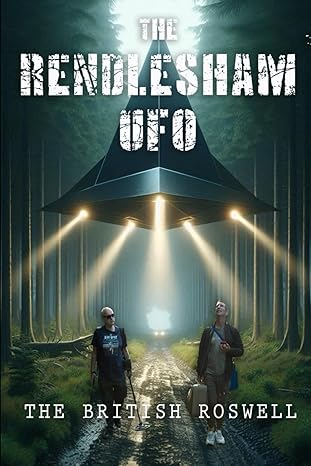
The Rendlesham UFO The British Roswell
The End of the Long Silence
The long silence that followed these events was never abandonment. It was preparation. Humanity needed to learn—through error, acceleration, and imbalance—that power without coherence is unsustainable.
Now, disclosure feels different. It no longer arrives as shock or announcement. It arrives as convergence. The questions have shifted from Is this real? to What does this ask of us?
The answer is neither fear nor salvation. It is responsibility.
Humanity is beginning to understand that consciousness is not passive within reality. Attention shapes probability. Emotional tone influences outcome. The future is not waiting to happen; it is listening.
Roswell and Rendlesham were not promises of intervention. They were mirrors held at different stages of maturity. One showed humanity what it did not yet know how to hold. The other showed humanity that it could be trusted with experience rather than possession.
Between them lies the true legacy of contact—not secrecy, not spectacle, but growth.
The silence is ending not because all truths have been revealed, but because humanity is learning how to hold them without fear. The future does not need to be seen in advance. It needs to be lived into wisely.
And that, perhaps, was the lesson all along.